The body of the gown is crafted from three different fabrics, all woven from yarns made from recycled plastic bottles (!). Plastic is one of the biggest pollutants on the planet. Being able to repurpose this waste and incorporate it into my gown for the #MetGala proves the power that creativity, technology and fashion can have by working together.
Translate
Search the site
Showing posts with label Environment. Show all posts
Wednesday, May 4, 2016
Emma Watson wearing a gown made from recycled bottles
"Thank you Calvin Klein & Eco Age for collaborating with me and creating the most amazing gown. I am proud to say it is truly sustainable and represents a connection between myself and all the people in the supply chain who played a role in creating it.
The body of the gown is crafted from three different fabrics, all woven from yarns made from recycled plastic bottles (!). Plastic is one of the biggest pollutants on the planet. Being able to repurpose this waste and incorporate it into my gown for the #MetGala proves the power that creativity, technology and fashion can have by working together.
Wednesday, August 26, 2015
The Flag at Half Mast by manen_lyset
This will be us.Lets love and care for one another.
Reading by Ace of Scares
"The flag flew at half-mast, clinging to a rusted pole atop a crumbling building coated in roots and vines.
When the invaders came, we were given a choice: fight, or surrender. We proudly chose to fight with all our might.
First came the drones, raining death from the above. Even on the sunniest of days, the clear blue sky instilled fear in the hearts of all who dared to leave their shelter.
Next were the soldiers. Their rallying cries echoed in the distance. The front line drew closer and closer to our homes, until they waged wars and held siege right outside our doors. Still, we did not surrender.
Then came the biological weapons. Yellow haze blinded brave men and women fighting for their nation. Clouds of emerald melted their skin and infected their minds. They lived on, in agony, until the morning of the red fog. Their blood boiled and evaporated, covering the landscape in a crimson steam.
The worst was the sabotage. We decided that, if we couldn't have our land, no one would. We poisoned the crops, killed the animals, and polluted the waters until there was nothing left, not even for our own survival. Our children were the first to die. Unaware of the danger, some ate tainted food supplies, others died of starvation, and some simply melted into our rivers of acid. The bodies we could find were buried in unmarked graves or thrown in overflowing ditches along unpaved roads.
Finally came the mushroom clouds, the last nail in humanity's coffin. They rendered the world inhospitable for the few remaining survivors. Before long, all that was left was a wasteland of bones and morphed shadows clinging to broken walls.
Turned white by acid rain, bleached by the sun, and worn by time, the flag continued to sway gently in the breeze. In the end, it was not a nation or its people that surrendered: it was humanity itself. And so, the white flag flew at half-mast for a species too proud to survive."
Credit
Reading by Ace of Scares
"The flag flew at half-mast, clinging to a rusted pole atop a crumbling building coated in roots and vines.
When the invaders came, we were given a choice: fight, or surrender. We proudly chose to fight with all our might.
First came the drones, raining death from the above. Even on the sunniest of days, the clear blue sky instilled fear in the hearts of all who dared to leave their shelter.
Next were the soldiers. Their rallying cries echoed in the distance. The front line drew closer and closer to our homes, until they waged wars and held siege right outside our doors. Still, we did not surrender.
Then came the biological weapons. Yellow haze blinded brave men and women fighting for their nation. Clouds of emerald melted their skin and infected their minds. They lived on, in agony, until the morning of the red fog. Their blood boiled and evaporated, covering the landscape in a crimson steam.
The worst was the sabotage. We decided that, if we couldn't have our land, no one would. We poisoned the crops, killed the animals, and polluted the waters until there was nothing left, not even for our own survival. Our children were the first to die. Unaware of the danger, some ate tainted food supplies, others died of starvation, and some simply melted into our rivers of acid. The bodies we could find were buried in unmarked graves or thrown in overflowing ditches along unpaved roads.
Finally came the mushroom clouds, the last nail in humanity's coffin. They rendered the world inhospitable for the few remaining survivors. Before long, all that was left was a wasteland of bones and morphed shadows clinging to broken walls.
Turned white by acid rain, bleached by the sun, and worn by time, the flag continued to sway gently in the breeze. In the end, it was not a nation or its people that surrendered: it was humanity itself. And so, the white flag flew at half-mast for a species too proud to survive."
Credit
Tuesday, May 5, 2015
[Video] This is why you don't throw gum on the ground from Being Latina
This is why you don't throw gum on the ground...#digilatino #belatino
Posted by Being Latino on Friday, November 7, 2014
Thursday, April 30, 2015
What is International Permaculture Day/ #SoilSupporter
"Healthy soil makes for healthy people, animals and plants; it provides the foundation for all life on land. Soil gives us food, clean water, clean air, medicine, fibre and fuel, it’s also a climate regulator and buffer. But soil is under threat. Millennia of agriculture and other human activities have robbed our soils of life. Today almost one third of the planet’s surface is classed as desert and a quarter of all agricultural soils have been lost. The remaining topsoil is depleted and could vanish within 60 years. The good news is that we can restore our soils and, at the same time, solve other global challenges.
Join us in the call to restore our soils, become a Soil Supporter!"
More Info...
Join us in the call to restore our soils, become a Soil Supporter!"
More Info...
"We are emerging from a story that helps soil and the professions associated with is as loathly or dirty"- Charles Eisenstein Check out this video form him and Over Grow the System
Permaculture Day 2015: Charles Eisenstein in Support of SoilCheck out our new video collaboration International Permaculture Day and Charles EisensteinWriter and visionary Charles Eisenstein shares why he's a Soil Supporter.Support soils everywhere on SUNDAY MAY 3RD – join or organize an action! www.permacultureday.orgVideo produced by Over Grow The System: www.overgrowthesystem.com/In association with:Charles Eisenstein: www.charleseisenstein.netInternational Permaculture Convergence @IPCUK2015: www.ipcuk.events/International Permaculture Day: www.permacultureday.org
Posted by Over Grow The System on Monday, April 27, 2015
Check out Over Grow the System
"Stories hold the ability to validate and perpetuate certain ways of understanding and navigating the world, while negating others. Our present social and cultural reality is undeniably shaped by narratives that are dictated by corporate media and other structures of domination. These narratives are set up to undermine both our personal and collective power and our embeddedness within a sacred web of life while glorifying commodity, celebrity and disposable culture. The impact of these stories on our world can not be underestimated, from large-scale agricultural and environmental practices to our personal dynamics with community, food, medicine and spirit.
However, many of us have awoken to the realization that we are empowered to over grow these systems. People around the world have begun to critically examine these narratives that shape our reality because we recognize that they have the power either to infuse meaning and sustenance into our world or eliminate it. From here, we decide which narratives no longer serve, and which ones we feel compelled to carry forward.
It is these stories that Over Grow the System has set out tell through video, photography and the written word."
Check out Over Grow the System
More Info..
However, many of us have awoken to the realization that we are empowered to over grow these systems. People around the world have begun to critically examine these narratives that shape our reality because we recognize that they have the power either to infuse meaning and sustenance into our world or eliminate it. From here, we decide which narratives no longer serve, and which ones we feel compelled to carry forward.
It is these stories that Over Grow the System has set out tell through video, photography and the written word."
Check out Over Grow the System
More Info..
Visit Tamera - a place of healing and non-violence
"The founding thought was to develop a non-violent life model for cooperation between human being, animal and nature. Soon it became clear that the healing of love and of human community had to be placed at the center of this work. Sexuality, love and partnership need to be freed from lying and fear, for there can be no peace on Earth as long as there is war in love. The ecological and technological research of Tamera includes the implementation of a retention landscape for the healing of water and nature, as well as a model for regional autonomy in energy and food. Through the Global Campus and the Terra Nova School we are working within a global network on the social, ecological and ethical foundations for a new Earth – Terra Nova."

Check out their website

Check out their website
Friday, April 17, 2015
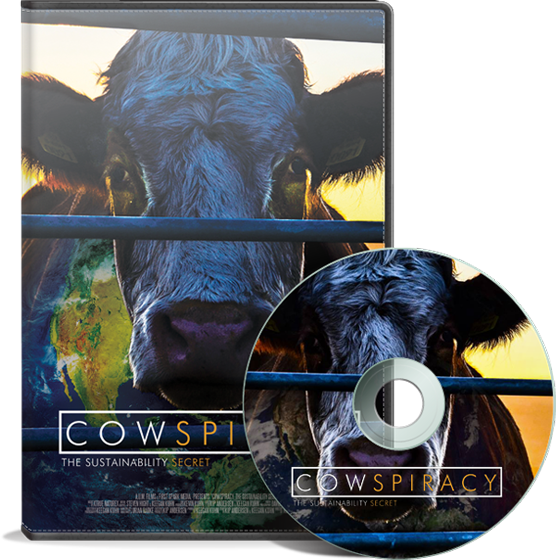
Watch Cowspiracy: The Sustainability Secret
"Cowspiracy: The Sustainability Secret is a groundbreaking feature-length environmental documentary following intrepid filmmaker Kip Andersen as he uncovers the most destructive industry facing the planet today – and investigates why the world’s leading environmental organizations are too afraid to talk about it.
Animal agriculture is the leading cause of deforestation, water consumption and pollution, is responsible for more greenhouse gases than the transportation industry, and is a primary driver of rainforest destruction, species extinction, habitat loss, topsoil erosion, ocean “dead zones,” and virtually every other environmental ill. Yet it goes on, almost entirely unchallenged.

As Andersen approaches leaders in the environmental movement, he increasingly uncovers what appears to be an intentional refusal to discuss the issue of animal agriculture, while industry whistleblowers and watchdogs warn him of the risks to his freedom and even his life if he dares to persist.
As eye-opening as Blackfish and as inspiring as An Inconvenient Truth, this shocking yet humorous documentary reveals the absolutely devastating environmental impact large-scale factory farming has on our planet, and offers a path to global sustainability for a growing population."
More Info...
Animal agriculture is the leading cause of deforestation, water consumption and pollution, is responsible for more greenhouse gases than the transportation industry, and is a primary driver of rainforest destruction, species extinction, habitat loss, topsoil erosion, ocean “dead zones,” and virtually every other environmental ill. Yet it goes on, almost entirely unchallenged.
As Andersen approaches leaders in the environmental movement, he increasingly uncovers what appears to be an intentional refusal to discuss the issue of animal agriculture, while industry whistleblowers and watchdogs warn him of the risks to his freedom and even his life if he dares to persist.
As eye-opening as Blackfish and as inspiring as An Inconvenient Truth, this shocking yet humorous documentary reveals the absolutely devastating environmental impact large-scale factory farming has on our planet, and offers a path to global sustainability for a growing population."
More Info...
Monday, March 30, 2015
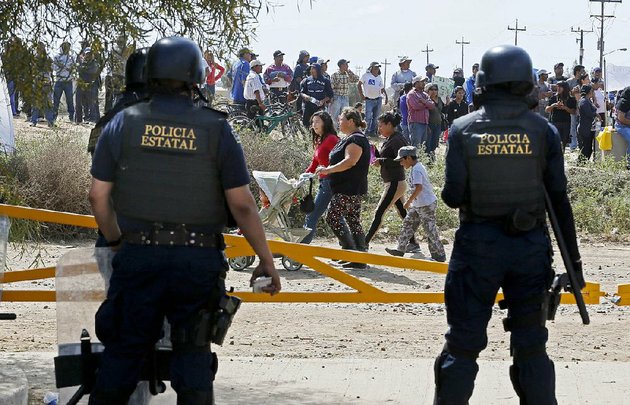
Strike halts harvest in Mexico - Protesting low wages, farmworkers avoid fields, block traffic by Arkansas Online
dang, all that for STRAWBERRIES?
wow!
Ieat these.
:(
I guess it just gives me ANOTHER reason to eat local
It's a sad day when food becomes a f*ing human rights issue.

^^ Yeah, over freakin' STRAWBERRIES
""Our primary focus continues to be toward the well-being of our employees and we are working with local authorities to ensure the safety of our workers and the local community," the statement said.
But produce picker Bernardo Velasco, 47, said his family lives in bleak conditions. His community of dirt streets south of Colonet has no running water. He said he buys five jugs every week so his family can drink and bathe.
wow!
I
:(
I guess it just gives me ANOTHER reason to eat local
It's a sad day when food becomes a f*ing human rights issue.

^^ Yeah, over freakin' STRAWBERRIES
""Our primary focus continues to be toward the well-being of our employees and we are working with local authorities to ensure the safety of our workers and the local community," the statement said.
But produce picker Bernardo Velasco, 47, said his family lives in bleak conditions. His community of dirt streets south of Colonet has no running water. He said he buys five jugs every week so his family can drink and bathe.
Friday, March 6, 2015
Take The Ethics of Eating class (Updated april 2015)
After the class is over with, you can just sign up and look at the materials, you do not have to take the class.
"About this Course
You face a difficult moral decision every time you decide what to eat. What impact should animal rights have on your decision? Is the suffering involved in meat, egg and dairy production bad enough that you should go vegan? How do your food choices affect the economy and the environment? Should you become a locavore? Should you eat only sustainably produced, "farm to table" food? Or is factory-farmed food more efficient and ultimately better for the environment?
We also face difficult food-related questions at the political-social level. Should states restrict their citizens' food choices so as to encourage healthy eating? Should governments grant patents on genetically modified crops? And how do we, as a society, implement effective food policies for a rapidly expanding world population?
This class will provide the tools required to reflect clearly and effectively on these challenging questions.
Our goal is to provide a working understanding of some leading ethical theories as well as the central empirical issues related to food production, distribution and consumption. Along the way, students will hear from a variety of scientists, philosophers, activists, and industry participants:
Carol Adams, author of The Sexual Politics of Meat
T. Colin Campbell, Cornell nutritionist and author of The China Study
Mark Bittman, cookbook author and New York Times food writer
Marion Nestle, nutritionist and author of Food Politics
Joe Regenstein, Cornell food scientist and director of the Kosher-Halal Food Initiative
Joel Salatin, alternative farming advocate and author of 9 books
Bryant Terry, award-winning chef, author of Vegan Soul Kitchen
Brian Wansink, Cornell food and brand psychologist, author of Mindless Eating
"About this Course
You face a difficult moral decision every time you decide what to eat. What impact should animal rights have on your decision? Is the suffering involved in meat, egg and dairy production bad enough that you should go vegan? How do your food choices affect the economy and the environment? Should you become a locavore? Should you eat only sustainably produced, "farm to table" food? Or is factory-farmed food more efficient and ultimately better for the environment?
We also face difficult food-related questions at the political-social level. Should states restrict their citizens' food choices so as to encourage healthy eating? Should governments grant patents on genetically modified crops? And how do we, as a society, implement effective food policies for a rapidly expanding world population?
This class will provide the tools required to reflect clearly and effectively on these challenging questions.
Our goal is to provide a working understanding of some leading ethical theories as well as the central empirical issues related to food production, distribution and consumption. Along the way, students will hear from a variety of scientists, philosophers, activists, and industry participants:
Carol Adams, author of The Sexual Politics of Meat
T. Colin Campbell, Cornell nutritionist and author of The China Study
Mark Bittman, cookbook author and New York Times food writer
Marion Nestle, nutritionist and author of Food Politics
Joe Regenstein, Cornell food scientist and director of the Kosher-Halal Food Initiative
Joel Salatin, alternative farming advocate and author of 9 books
Bryant Terry, award-winning chef, author of Vegan Soul Kitchen
Brian Wansink, Cornell food and brand psychologist, author of Mindless Eating
Tuesday, March 3, 2015
PornHub's WankBand +18
"Every day, millions of hours of adult content are consumed online, wasting energy in the process and hurting the environment. At Pornhub we decided to do something about it. Introducing The Wankband: The first wearable tech that allows you to love the planet by loving yourself."

Check out The WankBand

Check out The WankBand
Tuesday, February 10, 2015
Thursday, January 22, 2015
What is the G lish Foundation?
G-lish collects plastic rubbish and scrap African cloth and trains youth and women to transform those materials into twine. Skilled basket weavers weave the plastic and cloth twine into baskets, home-wares and art work using traditional weaving methods—thus preserving cultural heritage while helping alleviate poverty and tackling entrenched and overlooked environmental waste problems. We won a SEED Initiative award for sustainable social enterprise in 2010, one of 30 awarded globally.

Since 2010 G-lish Foundation has achieved the following impacts:
Environmental Impact
Prevented 358, 600 drinking water plastic bags from being burned and from entering rivers and farming soil by recycling them into high value products;
Because we pay producers by the 200 pieces of twine cut and twisted, and we record every payment on paper and in an Excel spreadsheet, and because 1 plastic bag = 1 twine, it's simple to tally how many plastic bags have been used since 2010 and easy to track this impact;
Prevented 2, 250 yards of waste cloth from being burned or thrown into rivers;
= Over 3 metric tonnes of recycled waste materials;

Since 2010 G-lish Foundation has achieved the following impacts:
Environmental Impact
Prevented 358, 600 drinking water plastic bags from being burned and from entering rivers and farming soil by recycling them into high value products;
Because we pay producers by the 200 pieces of twine cut and twisted, and we record every payment on paper and in an Excel spreadsheet, and because 1 plastic bag = 1 twine, it's simple to tally how many plastic bags have been used since 2010 and easy to track this impact;
Prevented 2, 250 yards of waste cloth from being burned or thrown into rivers;
= Over 3 metric tonnes of recycled waste materials;
Monday, January 19, 2015
Check out NatureTex products
Whether it's a backpack, a golf shoe or roofing - for countless years Cosmo/Starensier fabrics, finishes and composites have sparked inspiration in designers and developers by providing solutions to the question, "what if...".

Our diverse product line is designed and styled in the USA, yet either manufactured in our own plants in Southeast Asia or USA. By working closely with our customers throughout the entire product development process, we're able to capture their imagination and help make it a reality."
Their company NatureTex makes products from recycled products"

Our diverse product line is designed and styled in the USA, yet either manufactured in our own plants in Southeast Asia or USA. By working closely with our customers throughout the entire product development process, we're able to capture their imagination and help make it a reality."
Their company NatureTex makes products from recycled products"
- NatureTex50 - This lining fabric is made from 50% recycled plastic bottles.
- NatureTex 70 - The strobel/insole board in this shoe contains 70% recycled content, 80% is from recycled plastic bottles and the remaining 20% from recycled post-industrial material.
- NatureTex 100 - This lining material is made from 100% recycled plastic bottles.
- NatureTex Ultra - This lining fabric is made from 100% recycled post-industrial material
Wednesday, January 7, 2015
Renewable & Non-Renewable Resources: Definition & Differences
"Renewable Resources
Renewable resources are resources that are replenished by the environment over relatively short periods of time. This type of resource is much more desirable to use because often a resource renews so fast that it will have regenerated by the time you've used it up.
Think of this like the ice cube maker in your refrigerator. As you take some ice out, more ice gets made. If you take a lot of ice out, it takes a little more time to refill the bin but not a very long time at all. Even if you completely emptied the entire ice cube bin, it would probably only take a few hours to 'renew' and refill that ice bin for you. Renewable resources in the natural environment work the same way.
Solar energy is one such resource because the sun shines all the time. Imagine trying to harness all of the sun's energy before it ran out! Wind energy is another renewable resource. You can't stop the wind from blowing any more than you can stop the sun from shining, which makes it easy to 'renew.'
Any plants that are grown for use in food and manufactured products are also renewable resources. Trees used for timber, cotton used for clothes, and food crops, such as corn and wheat, can all be replanted and regrown after the harvest is collected. ..
Geothermal energy is a renewable resource that provides heat from the earth - 'geo' means 'earth' and 'thermal' means 'heat.' You know all of those volcanoes on Earth that spew hot lava when they erupt? That lava has got to come from somewhere, right? It's actually sitting underneath the earth's surface as incredibly hot rock and magma. ...
Renewable resources are resources that are replenished by the environment over relatively short periods of time. This type of resource is much more desirable to use because often a resource renews so fast that it will have regenerated by the time you've used it up.
Think of this like the ice cube maker in your refrigerator. As you take some ice out, more ice gets made. If you take a lot of ice out, it takes a little more time to refill the bin but not a very long time at all. Even if you completely emptied the entire ice cube bin, it would probably only take a few hours to 'renew' and refill that ice bin for you. Renewable resources in the natural environment work the same way.
Solar energy is one such resource because the sun shines all the time. Imagine trying to harness all of the sun's energy before it ran out! Wind energy is another renewable resource. You can't stop the wind from blowing any more than you can stop the sun from shining, which makes it easy to 'renew.'
Any plants that are grown for use in food and manufactured products are also renewable resources. Trees used for timber, cotton used for clothes, and food crops, such as corn and wheat, can all be replanted and regrown after the harvest is collected. ..
Geothermal energy is a renewable resource that provides heat from the earth - 'geo' means 'earth' and 'thermal' means 'heat.' You know all of those volcanoes on Earth that spew hot lava when they erupt? That lava has got to come from somewhere, right? It's actually sitting underneath the earth's surface as incredibly hot rock and magma. ...
Monday, November 24, 2014
I Haven't Made Any Trash In 2 Years. Here's What My Life Is Like
"1. I save money.
I now make a grocery list when I go shopping, which means being prepared and not grabbing expensive items impulsively. Additionally, buying food in bulk means not paying a premium for packaging. When it comes to my wardrobe, I don't purchase new clothing; I shop secondhand and get my clothes at a heavily discounted price.
2. I eat better.
Since I purchase unpackaged foods, my unhealthy choices are really limited. Instead, I eat a lot of organic fruits and vegetables, bulk whole grains and legumes, as well as a lot of seasonal, local food, since farmers markets offer amazing unpackaged produce.
3. I'm happier.
Before I adopted my zero-waste lifestyle, I would find myself scrambling to the supermarket before it closed, because I didn't shop properly, ordering in takeout because I didn't have food, always going to the pharmacy to get this scrub and that cream, and cleaning constantly because I had so much stuff."
See the entire article @ MindBodyGreen
More Info...
I now make a grocery list when I go shopping, which means being prepared and not grabbing expensive items impulsively. Additionally, buying food in bulk means not paying a premium for packaging. When it comes to my wardrobe, I don't purchase new clothing; I shop secondhand and get my clothes at a heavily discounted price.
2. I eat better.
Since I purchase unpackaged foods, my unhealthy choices are really limited. Instead, I eat a lot of organic fruits and vegetables, bulk whole grains and legumes, as well as a lot of seasonal, local food, since farmers markets offer amazing unpackaged produce.
3. I'm happier.
Before I adopted my zero-waste lifestyle, I would find myself scrambling to the supermarket before it closed, because I didn't shop properly, ordering in takeout because I didn't have food, always going to the pharmacy to get this scrub and that cream, and cleaning constantly because I had so much stuff."
See the entire article @ MindBodyGreen
More Info...
Saturday, November 22, 2014
Check out Enthea(dot)org from Paul Hughes
"Welcome to my whole-brained canvas and visionary pallet for exploring the frontiers of art, science and consciousness. I am an artist, scientist, comprehensivist and free-lance human being. I am currently the director of Vivation International, where I’ve spent the last few years traveling the globe teaching workshops on personal empowerment and deep emotional healing.

Despite the problems we have in the world today, I believe we are on the verge of a profound evolutionary jump, beyond our technological adolescence, into becoming mature co-creators in the universe. Most people think this is impossible, but I believe it is entirely doable, practical, desirable, and critical. As far back as 1965, Bucky Fuller said we have the necessary design science for all of us to live harmoniously and abundantly on planet Earth. All that is needed is a shift in consciousness; a realization that it is possible, and then acting on that realization. I’ve outlined one possible scenario in my essay Innovating Our Way to a Peaceful and Liberating Anarchy, as well as documenting the ever expanding tools of radical abundance that will help us do it."
Check out Enthea(dot)org from Paul Hughes

Despite the problems we have in the world today, I believe we are on the verge of a profound evolutionary jump, beyond our technological adolescence, into becoming mature co-creators in the universe. Most people think this is impossible, but I believe it is entirely doable, practical, desirable, and critical. As far back as 1965, Bucky Fuller said we have the necessary design science for all of us to live harmoniously and abundantly on planet Earth. All that is needed is a shift in consciousness; a realization that it is possible, and then acting on that realization. I’ve outlined one possible scenario in my essay Innovating Our Way to a Peaceful and Liberating Anarchy, as well as documenting the ever expanding tools of radical abundance that will help us do it."
Check out Enthea(dot)org from Paul Hughes
Saturday, October 11, 2014
Tell congress to save our number one food security guard the Honeybee
Our nation’s number one food security guard, the honeybee, is dying by the thousands. In recent years, nearly one third of commercial bee colonies in the U.S. have been dying over the winter. And in Oregon last summer roughly 50,000 bumblebees dropped dead after being exposed to a pesticide sprayed on trees for purely aesthetic purposes. The situation is so bad that people have started to dub it the "Bee-pocalypse"
One third of the food produced in North America, including nearly 100 varieties of fruits and vegetables like apples, pumpkins, cranberries, and avocados, rely on honeybees for pollination -- we can’t afford to lose them. Luckily, Congress can do something about it -- pass a bill (H.R. 2692) to protect our honeybees by temporarily banning certain pesticides. But they will only do it if we speak out now.
Sign petition/Tips about how to call your representive
One third of the food produced in North America, including nearly 100 varieties of fruits and vegetables like apples, pumpkins, cranberries, and avocados, rely on honeybees for pollination -- we can’t afford to lose them. Luckily, Congress can do something about it -- pass a bill (H.R. 2692) to protect our honeybees by temporarily banning certain pesticides. But they will only do it if we speak out now.
Sign petition/Tips about how to call your representive
Subscribe to:
Posts (Atom)