Translate

Search the site

Showing posts with label Chemistry. Show all posts

Monday, March 28, 2016

What is Aerogel?

"Aerogel is a synthetic porous ultralight material derived from a gel, in which the liquid component of the gel has been replaced with a gas.The result is a solid with extremely low density and low thermal conductivity. Nicknames include frozen smoke, solid smoke, solid air, or blue smoke owing to its translucent nature and the way light scatters in the material. It feels like fragile expanded polystyrene to the touch. Aerogels can be made from a variety of chemical compounds.
Aerogel was first created by Samuel Stephens Kistler in 1931, as a result of a bet[citation needed] with Charles Learned over who could replace the liquid in "jellies" with gas without causing shrinkage.
Aerogels are produced by extracting the liquid component of a gel through supercritical drying. This allows the liquid to be slowly dried off without causing the solid matrix in the gel to collapse from capillary action, as would happen with conventional evaporation. The first aerogels were produced from silica gels. Kistler's later work involved aerogels based on alumina, chromia and tin dioxide. Carbon aerogels were first developed in the late 1980s.[citation needed]
Aerogel does not have a designated material with set chemical formula but the term is used to group all the material with a certain geometric structure."
See more @ Wikipedia

More Info...


  1. Aerogels: Thinner, Lighter, Stronger @ NASA
  2. QUEST Lab: Aerogel - KQED QUEST


Sunday, May 24, 2015

See subatomic particles in action—with the naked eye. from NOVA

See subatomic particles in action—with the naked eye.

Posted by NOVA on Wednesday, March 18, 2015

Friday, April 17, 2015

Eau de Livre T-Shirt -- That Wonderful Old Book Smell Molecules T-Shirt/ the scent of an older book - SorceryScience

The chemicals featured on the shirt are Vanillin (vanilla scent), Furfural (an almond-like scent), Ethyl Benzene (a sweet scent), Toluene (a sweet scent), and Benzaldehyde (an almond-like scent). Main source: "Identification of Volatile Organic Compounds Emitted by a Naturally Aged book" by A. Lattuati-Derieux et al. (2004)."


Friday, March 6, 2015

Take the Medicinal Chemistry: The Molecular Basis of Drug Discovery free course

Great to learn the chemical makeup and how to read it. I took this class to learn more about things like how DMT, and other drugs react in the body.  It's free and it's just PDFs of things.No pressure.

"*Note - This is an Archived course*

This is a past/archived course. At this time, you can only explore this course in a self-paced fashion. Certain features of this course may not be active, but many people enjoy watching the videos and working with the materials. Make sure to check for reruns of this course.
Medicinal Chemistry: The Molecular Basis of Drug Discovery
This course explores how to bring a drug from concept to market, and how a drug's chemical structure relates to its biological function. The course opens with an introduction to the drug approval process. This introduction combines the social, economic, and ethical aspects of drug discovery. Topics include how diseases are selected for treatment, the role of animal testing, and the costs of various discovery phases. The course then focuses on the scientific side of drug discovery. Topics include how drugs interact with biological molecules, drug absorption and elimination, and the discovery of weakly active molecules and their optimization into viable drugs."

Take the Medicinal Chemistry: The Molecular Basis of Drug Discovery free course

Thursday, November 20, 2014

Chemistry Essentials For Dummies (192 pages)

"Whether studying chemistry as part of a degree requirement or as part of a core curriculum, students will find Chemistry Essentials For Dummies to be an invaluable quick reference guide to the fundamentals of this often challenging course.

Chemistry Essentials For Dummies contains content focused on key topics only, with discrete explanations of critical concepts taught in a typical two-semester high school chemistry class or a college level Chemistry I course, from bonds and reactions to acids, bases, and the mole. This guide is also a perfect reference for parents who need to review critical chemistry concepts as they help high school students with homework assignments, as well as for adult learners headed back into the classroom who just need to a refresher of the core concepts. The Essentials For Dummies Series Dummies is proud to present our new series, The Essentials For Dummies. Now students who are prepping for exams, preparing to study new material, or who just need a refresher can have a concise, easy-to-understand review guide that covers an entire course by concentrating solely on the most important concepts. From algebra and chemistry to grammar and Spanish, our expert authors focus on the skills students most need to succeed in a subject."
More Info...
Buy Chemistry Essentials For Dummies
--PDF

Organic Chemistry I and 2 For Dummies (For Dummies )

"The easy way to take the confusion out of organic chemistry Organic chemistry has a long-standing reputation as a difficult course. Organic Chemistry I For Dummies takes a simple approach to the topic, allowing you to grasp concepts at your own pace.

This fun, easy-to-understand guide explains the basic principles of organic chemistry in simple terms, providing insight into the language of organic chemists, the major classes of compounds, and top trouble spots. You'll also get the nuts and bolts of tackling organic chemistry problems, from knowing where to start to spotting sneaky tricks that professors like to incorporate. Refreshed example equations New explanations and practical examples that reflect today's teaching methods Fully worked-out organic chemistry problems Baffled by benzines? Confused by carboxylic acids? Here's the help you need--in plain English!"
More Info...
Organic Chemistry I For Dummies (For Dummies )
--PDF
--Cheat Sheet
Organic Chemistry 2 For Dummies (For Dummies )
The Basics of Organic Chemistry
Notes

Chemistry For Dummies series

"Whether studying chemistry as part of a degree requirement or as part of a core curriculum, students will find Chemistry Essentials For Dummies to be an invaluable quick reference guide to the fundamentals of this often challenging course. Chemistry Essentials For Dummies contains content focused on key topics only, with discrete explanations of critical concepts taught in a typical two-semester high school chemistry class or a college level Chemistry I course, from bonds and reactions to acids, bases, and the mole.
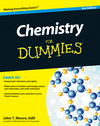
Chemistry For Dummies, 2nd Edition (1118007301) cover image
This guide is also a perfect reference for parents who need to review critical chemistry concepts as they help high school students with homework assignments, as well as for adult learners headed back into the classroom who just need to a refresher of the core concepts. The Essentials For Dummies Series Dummies is proud to present our new series, The Essentials For Dummies. Now students who are prepping for exams, preparing to study new material, or who just need a refresher can have a concise, easy-to-understand review guide that covers an entire course by concentrating solely on the most important concepts. From algebra and chemistry to grammar and Spanish, our expert authors focus on the skills students most need to succeed in a subject."
More Info..
Buy Chemistry Essentials For Dummies
--PDF
Buy Chemistry For Dummies
--PDF
--Cheat Sheet
Buy Chemistry For Dummies 2

Saturday, November 8, 2014

Apparently, Burning NH4Cr2O7 With HgSCN Opens A Portal To Hell.

"Of all the chemical reactions we've covered within the past few months, the one filmed below probaby takes the prize for coolest looking and possibly scariest. After the pile of reactants is lit, it begins to look like tentacles are crawling out of a portal to Hell.

In reality, what's depicted in the video below is actually two reactions: the decomposition of ammonium dichromate and the combustion reaction of mercury (II) thiocyanate.

The orange powder is ammonium dichromate and when heat is introduced, it forms nitrogen gas, water, and ammonium (III) oxide, which is the dark powder that looks like the volcano you see.

What appears to be tentacles is actually what happens when heat is introduced to mercury (II) thiocyanate. The white solid expands when it's heated to become a dark, tentacle-like mass due to its decomposition to carbon nitride. In addition, sulfur dioxide and mercury (II) sulfide are also produced. The reaction is appropriately nicknamed the "Pharoah's Serpent" and was sold in stores as fireworks until people realized it's toxic."

See entire article at @IFLScience 

More Info...


Friday, October 3, 2014

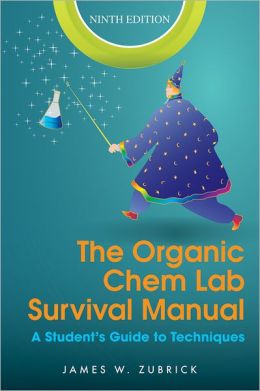
The Organic Chem Lab Survival Manual: A Student's Guide to Techniques by James W. Zubrick

"A small helpful book that helped me get an A in organic chemistry lab but also help visualize lectures too."

Simple, easy read and explains chemistry that students and professors can both understand.Not too long, not too boring.
More Info...

  1. Buy 
  2. PDF

Wednesday, September 3, 2014

TheNewBoston's biology and chemistry playlist

TheNewBoston,Bucky, has a playlist of videos where he describes chemistry and biology from the beginning. He is very descriptive and people who have no idea about chemistry can follow along.

Check out TheNewBoston's Chemistry playlist

TheNewBoston's Biology playlist.

Sunday, August 31, 2014

Who was Alexander Shulgin godfather of psychedelics

"Alexander Theodore "Sasha" Shulgin (June 17, 1925 – June 2, 2014) was an American medicinal chemist, biochemist, pharmacologist, psychopharmacologist, and author. Shulgin is credited with introducing MDMA (also known as "ecstasy") to psychologists in the late 1970s for psychopharmaceutical use. He discovered, synthesized, and personally bioassayed over 230 psychoactive compounds, and evaluated them for their psychedelic and/or entactogenic potential.
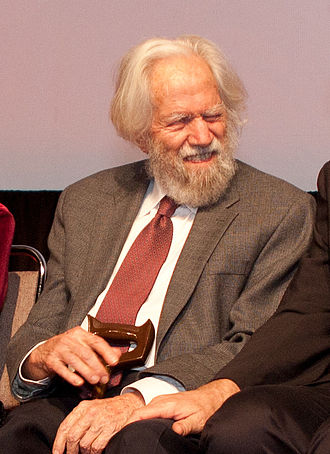
Alexander Shulgin cropped.jpg
In 1991 and 1997, he and his wife Ann Shulgin authored the books PIHKAL and TIHKAL (standing for Phenethylamines and Tryptamines I Have Known And Loved), which extensively described their work and personal experiences with these two classes of psychoactive drugs. Shulgin performed seminal work into the descriptive synthesis of many of these compounds. Some of Shulgin's noteworthy discoveries include compounds of the 2C* family (such as 2C-B) and compounds of the DOx family (such as DOM).

Due in part to Shulgin's extensive work in the field of psychedelic research and the rational drug design of psychedelic drugs, he has since been dubbed the "godfather of psychedelics"

See more @ Wikipedia

More Info...
  1. Official Site:Shulgin Research Institute
  2. Bio @ Erowid
  3. Shulgin's books at Erowid . Learn about the drug's molecules, etc

Monday, June 16, 2014

Acetyl Coenzyme A

*Note:Posting to educate. To educate people about the fact that "fat" is composed from molecules in chemistry, NOT a measurement of self-worth or (many times, not all times) health.

Fat and thin people - the result of acetyl coA
Fat and thin people - both bodies are the result of the action of acetyl CoA.

The A stood for acetyl, since one of CoA's main jobs is to transfer two-carbon units in the form of acetyl between various biological molecules. It can be thought of as the body's 'delivery truck', since it transports its cargo of C2 along the roadways of blood vessels to the retail stores (muscles) where it's unloaded.

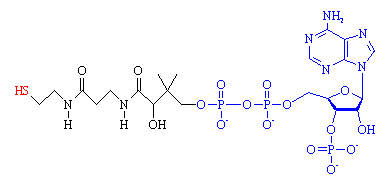
CoA - click for 3D structure
Coenzyme A. The 'business end', the -SH group where the acetyl group attaches is shown in red. The fragment from ADP is shown in blue.

CoA is composed of two main parts, a long protein-like chain (shown in black in the figure), joined to adenosine diphosphate, ADP, (shown in blue) which is one of the molecules (along with ATP) used for energy storage. The important part of the molecule is at the end of the protein chain, which terminates in a sulph-hydryl (-SH) group (red). This group is highly reactive, and links to carboxylic acid molecules via a thioester bond. The most important acid is acetic acid, and when it is joined to CoA, the resulting compound is known as acetyl-CoA.

The thioester link, however, is very high energy bond, and therefore unstable. This means that the acetyl group can be easily transferred to other molecules, and so acetyl-CoA is used as a universal intermediate which provides the C2 fragment for numerous biochemical syntheses.

Monday, April 14, 2014

Who was Percy Julian?

"Percy Lavon Julian (April 11, 1899 – April 19, 1975) was an American research chemist and a pioneer in the chemical synthesis of medicinal drugs from plants. He was the first to synthesize the natural product physostigmine, and a pioneer in the industrial large-scale chemical synthesis of the human hormones progesterone and testosterone from plant sterols such as stigmasterol and sitosterol. His work laid the foundation for the steroid drug industry's production of cortisone, other corticosteroids, and birth control pills.
Percy Lavon Julian.jpg
He later started his own company to synthesize steroid intermediates from the wild Mexican yam. His work helped greatly reduce the cost of steroid intermediates to large multinational pharmaceutical companies, helping to significantly expand the use of several important drugs.

Julian received more than 130 chemical patents. He was one of the first African-Americans to receive a doctorate in chemistry. He was the first African-American chemist inducted into the National Academy of Sciences, and the second African-American scientist inducted (behind David Blackwell) from any field."

See more..

Sunday, March 23, 2014

Molecule Jewelry

"One of the most extraordinary sterling silver jewelry I’ve ever saw. Unbelievable how much the language of science can show to us with its symbols. An abundance of symbols will help you to find a gift for everyone. You can make a gift to your beloved with standard symbol of love – heart, but it is so ordinarily. Do you know what it feels like to have a lot of the neurotransmitter dopamine actually you feel it when you in love. You can gift to your favorite symbol of love made in form of molecule of dopamine....

Probably you will be interested by a modern symbol of happiness – Serotonin? You should know that all our variations of moods are controlled by just a handful of chemicals. All pieces of this collection are made of sterling silver."

chocolate - theobromine molecule - earrings

Credit

More Info..

  1. Official Site
  2. Store

Friday, February 28, 2014

Chemistry Cliff Quick Review

"Inside the Book:


  • Elements
  • Atoms
  • Atomic Structure
  • Electron Configurations
  • Chemical Bonding
  • Organic Compounds
  • States of Matter
  • Gases
  • Solutions
  • Acids and Bases
  • Oxidation-Reduction Reactions
  • Electrochemistry
  • Equilibrium
  • Thermodynamics
  • Review Questions
  • Resource Center
  • Glossary...


CliffsNotes Quick Review guides give you a clear, concise, easy-to-use review of the basics. Introducing each topic, defining key terms, and carefully walking you through sample problems, this guide helps you grasp and understand the important concepts needed to succeed.

Access 500 additional practice questions at www.cliffsnotes.com/go/quiz/chemistry

Master the Basics –Fast

Complete coverage of core concepts

Easy topic-by-topic organization"

More Info...
Buy


Tuesday, January 14, 2014

Equilibrium,

1.
a state of rest or balance due to the equal action of opposing forces.
2.
equal balance between any powers, influences, etc.; equality of effect.
3.
mental or emotional balance; equanimity: The pressures of the situation caused her to lose her equilibrium.
4.
Chemistry . the condition existing when a chemical reaction and its reverse reaction proceed at equal rates. "

Credit


"the condition of a system in which all competing influences are balanced, in a wide variety of contexts"

Credit

More info...
List of types of equilibrium

Wednesday, January 1, 2014

Molar mass

"What is molar mass?

Molar mass is the weight of one mole (or 6.02 x 10²³ molecules) of any chemical compounds. Molar masses of common chemical compounds that you might find in the chemistry laboratory can range between 18 grams/mole for compounds like water to hundreds of grams per mole for more complex chemical compounds.

The lightest possible chemical that one can have under normal conditions is hydrogen gas, or H2. There is no limit to how heavy a chemical compound can be - it is not uncommon for macromolecules (large organic or bioorganic compounds such as DNA) to weigh thousands of grams per mole.

How can I find the molar mass of an element?

The molar mass of elements is found by looking at the atomic mass of the element on the periodic table. For example, if you want to find the molar mass of carbon, you would find the atomic mass of carbon on the periodic table, and this is equal to the molar mass in grams per mole. So, in our example, carbon has a molar mass of 12.01 grams per mole.

There are a few exceptions to this rule. In some cases, the element is usually found in a different form than just one unbonded atom. In the case of hydrogen, nitrogen, oxygen, fluorine, chlorine, bromine, and iodine, the element is diatomic, meaning that each molecule of the element has two atoms of that element stuck together. As a result, the formula of hydrogen is H2, nitrogen is N2, etc.

This gets weirder for a couple of cases... phosphorus is normally found in clumps of four atoms, P4, and sulfur is found in clumps of eight atoms, or S8.

Still, aside from the exceptions above, all elements have the same molar mass as the atomic masses on the periodic table.


How can I find the molar mass of a chemical compound?


For any chemical compound that's not an element, we need to find the molar mass from the chemical formula. To do this, we need to remember a few rules:

1. Molar masses of chemical compounds are equal to the sums of the molar masses of all the atoms in one molecule of that compound. If we have a chemical compound like NaCl, the molar mass will be equal to the molar mass of one atom of sodium plus the molar mass of one atom of chlorine. If we write this as a calculation, it looks like this:

(1 atom x 23 grams/mole Na) + (1 atom x 35.5 grams/mole Cl) = 58.5 grams/mole NaCl


2. If you have a subscript in a chemical formula, then you multiply the number of atoms of anything next to that subscript by the number of the subscript. For most compounds, this is easy. For example, in iron (II) chloride, or FeCl2, you have one atom of iron and two atoms of chlorine. The molar mass will be equal to (1 atom x 56 grams/mole Fe) + (2 atoms x 35.5 grams/mole of chlorine) = 127 grams/mole of iron (II) chloride.

For other compounds, this might get a little bit more complicated. For example, take the example of zinc nitrate, or Zn(NO3)2. In this compound, we have one atom of zinc, two atoms of nitrogen (one atom inside the brackets multiplied by the subscript two) and six atoms of oxygen (three atoms in the brackets multiplied by the subscript two). The molar mass of zinc nitrate will be equal to (1 atom x 65 grams/mole of zinc) + (two atoms x 14 grams/mole of nitrogen) + (six atoms x 16 grams/mole of oxygen) = 189 grams/mole of zinc nitrate.

For all other compounds, the general idea is the same. Basically, you should know how to find the molar masses of any chemical compound now. In the next and final section, I'll give you some practice problems, followed by a solution key..."

Read more...

More info..
How to calculate molar mass
Molar mass calculator
The mole and molar mass